
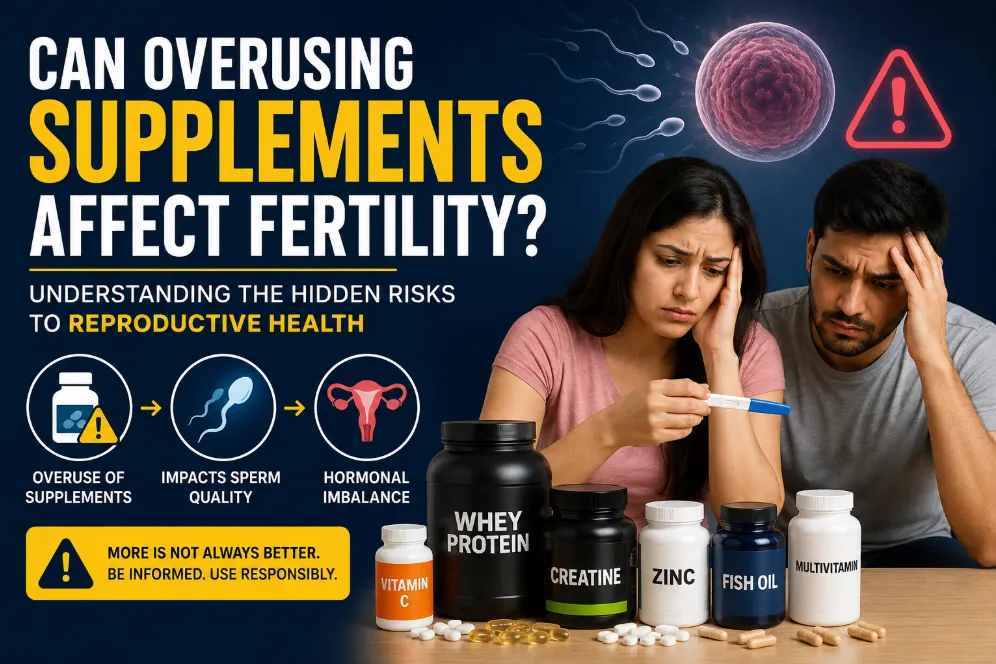
For many people today, supplements have quietly become part of everyday life.
A multivitamin in the morning.
Protein powder after workouts.
Vitamin D for immunity.
Biotin for hair growth.
Fish oil for heart health.
And sometimes, a mix of “fertility-boosting” supplements recommended by influencers, gym trainers, or social media wellness trends.
After all, if vitamins are good for health, taking more should be even better right?
Not always.
While supplements can absolutely support overall wellbeing when used correctly, overusing supplements can sometimes create unexpected health problems including risks to fertility.
This becomes especially important for couples trying to conceive.
Because when it comes to reproductive health, balance matters more than excess.
What Are Supplements?
Supplements are products designed to provide nutrients your body may not be getting sufficiently from food.
They come in different forms, including:
● Tablets
● Capsules
● Powders
● Gummies
● Liquids
Common supplements include:
● Multivitamins
● Vitamin D
● Calcium
● Iron
● Fish oil
● Zinc
● Protein supplements
● Antioxidants
Their purpose is simple:
To fill nutritional gaps and support health when dietary intake alone may not be enough.
For some people, supplements are medically necessary.
Pregnant women may need folic acid.
People with deficiencies may require vitamin support.
Athletes may need additional nutritional guidance.
But problems often begin when people self-prescribe or combine multiple supplements without proper medical advice.
Are Supplements Always Safe?
There is a common assumption that supplements are harmless because they are available over the counter.
But “natural” does not always mean risk-free.
Your body needs nutrients in specific amounts.
Too little can create deficiencies.
But too much can also disrupt normal body function.
When supplements are overused, the body may struggle to process excess nutrients, potentially affecting hormones, organ health, and even fertility.
In some cases, more supplementation may actually work against reproductive health rather than support it.
How Can Overusing Supplements Affect Fertility?
Many people are surprised to learn that certain supplements especially in excessive doses may interfere with reproductive health.
Here are some important examples.
1. Testosterone Supplements May Reduce Sperm Production
Men trying to improve strength, energy, or muscle gain sometimes take testosterone boosters.
But excessive testosterone supplementation can actually have the opposite effect on fertility.
Why?
Because artificial testosterone may signal the body to reduce natural sperm production.
This may lead to:
● Reduced sperm count
● Lower sperm quality
● Difficulty conceiving naturally
This is particularly important for men trying to become fathers.
2. Too Many Antioxidants May Harm Sperm Health
Antioxidants are often promoted as fertility-friendly.
And in moderation, they can help reduce oxidative stress.
But excessive antioxidant use may sometimes disrupt the natural balance required for healthy sperm function.
In some situations, overuse may negatively affect sperm quality and fertilisation potential.
3. Excess Vitamin E May Affect Female Fertility
Vitamin E supports many important body functions.
However, excessive intake in women may potentially affect ovarian health by reducing primary follicle development over time.
Since follicles are essential for egg development, balance becomes important.
4. Unregulated Supplements Can Affect Hormones
Not all supplements are properly regulated.
Some products marketed for fitness, weight loss, or hormonal support may contain hidden ingredients.
These substances may disrupt reproductive hormones and potentially affect:
● Ovulation
● Menstrual cycles
● Sperm production
● Hormonal balance
This is why blindly following social media supplement trends can sometimes be risky.
Can Too Much Vitamin Intake Be Harmful During Fertility or Pregnancy?
Yes.
Even essential vitamins can become problematic in excessive amounts.
Vitamin A
Vitamin A supports immunity and vision.
But too much during pregnancy may increase risks of:
● Liver damage
● Birth defects in developing babies
Iron
Iron is essential, especially during pregnancy.
However, overconsumption may cause:
● Digestive discomfort
● Nausea
● Organ strain in severe cases
Zinc
Zinc supports fertility, immunity, and DNA synthesis.
But excessive zinc may lead to:
● Nausea
● Digestive problems
● Immune suppression
Vitamin C
Many people take high-dose Vitamin C for immunity.
Too much, however, may increase the risk of:
● Kidney stones
● Digestive discomfort
Calcium
Calcium supports healthy bones and teeth.
But excessive calcium intake may interfere with iron absorption, which becomes important during pregnancy and fertility planning.
Protein Supplements
Protein powders are increasingly common among gym-goers.
However, excessive protein supplementation especially products with added hormones or unregulated ingredients may negatively affect sperm quality in some men.
At a trusted IVF hospital in chennai, specialists often encourage couples to discuss all supplements they are taking before fertility treatment begins.
Because even well-intentioned habits can sometimes influence reproductive outcomes.
How Do You Know If You Are Overusing Supplements?
Sometimes, the body gives warning signs.
Common symptoms of supplement overuse may include:
● Chronic fatigue
● Dizziness or lightheadedness
● Nausea or stomach discomfort
● Diarrhoea or digestive issues
● Frequent headaches
● Increased hair fall
● Muscle weakness
● Brain fog or confusion
These symptoms may indicate:
● Nutrient toxicity
● Hormonal imbalance
● Nutrient interactions affecting absorption
If symptoms appear, it is important not to ignore them.
A doctor can help determine whether supplements may be contributing to the problem.
How to Avoid Supplement Overuse
The good news?
Preventing overuse is usually simple.
Prioritise Food First
Whenever possible, get nutrients from whole foods.
A balanced diet often provides what the body naturally needs.
Check Product Labels
Many fortified foods already contain added nutrients.
Consuming multiple fortified products plus supplements may accidentally lead to overconsumption.
Avoid Combining Supplements Randomly
Taking several products together may increase certain vitamins far beyond recommended limits.
Always check dosages.
Do Not Self-Prescribe Long-Term Use
Just because something worked for someone else online does not mean it is right for you.
Always consult a doctor before long-term supplementation.
At the best fertility hospital in chennai, fertility specialists increasingly review nutrition, supplements, and lifestyle factors alongside fertility assessments because reproductive health is influenced by more than just medical tests.
Sometimes, small lifestyle adjustments create meaningful improvements.
Final Thoughts
Supplements are meant to support health not replace it.
When used correctly, they can prevent deficiencies and improve wellbeing.
But overusing supplements, especially without medical guidance, may sometimes create unintended fertility risks.
The key is balance.
More is not always better.
If you are trying to conceive, planning pregnancy, or concerned about fertility, it is worth reviewing what supplements you are taking and whether they are actually helping your body.
Because when it comes to fertility, informed choices often matter more than quick fixes.
